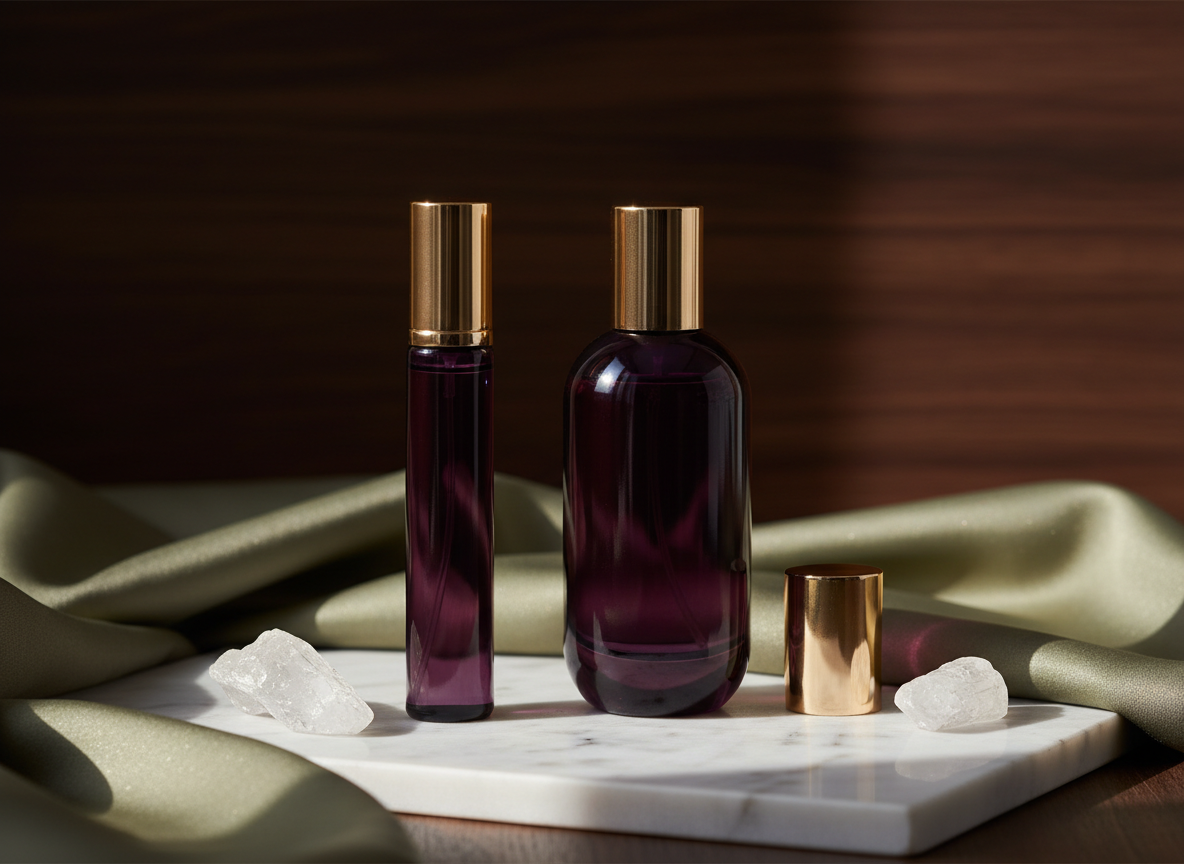
Perfume oil and eau de parfum can create very different layering results even when they share similar notes. Oils tend to sit closer to the skin and add a concentrated base; sprays disperse fragrance across a wider area and can create more lift and projection.

Trend context: Pinterest Predicts 2026 reported growth in searches for niche perfume collections (+500%), perfume layering combinations (+125%), perfume notes (+80%), scent layering (+75%) and signature scent (+45%). The figures reflect Pinterest’s reported global English-language search data.
The practical difference
| Characteristic | Perfume oil | Eau de parfum |
|---|---|---|
| Carrier | Usually oil-based | Typically alcohol-based spray format |
| Application | Roller, dabber or small applicator | Atomized spray |
| Typical feel | Closer, denser, skin-focused | More diffusive and airborne |
| Best layering role | Base or targeted accent | Main scent or projecting top layer |
| Placement | Pulse points and small areas | Skin or clothing where appropriate |
Actual concentration and performance vary by brand. “Oil” or “eau de parfum” on the label does not guarantee a specific longevity or projection level.
Why perfume oil works well as a base
Oil stays in a smaller application area and can give the combination a warm, close foundation. A vanilla, musk, amber or woody oil underneath a spray fragrance can reinforce the base without creating another large cloud of scent.
This can be especially useful when you want the layer to feel blended rather than like two equally loud perfumes.
Why eau de parfum works well on top
A spray distributes fragrance more broadly, so it can create the first impression of the combination. Citrus, floral, aromatic and fruity eau de parfums can add lift over a softer oil base.
A Peart note: Think in roles: one layer provides the foundation, the other provides the shape people notice first.
Which order should you apply them?
A practical starting point is oil first, then spray fragrance after the oil has settled. This gives the more localized oil a chance to sit on the skin before the more diffusive scent is added.
But layering has no universal order. If the oil is extremely strong and the spray is delicate, reverse the roles or use less oil. Test both orders on separate days.
Do you need to apply them to the same exact spot?
No. Layering can happen by overlap or by proximity. You can apply oil to pulse points and spray the eau de parfum elsewhere. This often creates a more breathable result and makes it easier to control intensity.
How to avoid overpowering the combination
- Start with less of each product than you would wear alone.
- Use one dominant fragrance and one supporting layer.
- Avoid stacking two very dense fragrances at full strength.
- Wait through the dry-down before adding more.
- Consider the setting; close indoor environments require more restraint.
Skin and clothing considerations
Fragrance oils can stain fabric depending on the formula, so do not apply them to clothing unless the product specifically indicates that use. Spray fragrances can also mark delicate textiles. Follow product instructions and test cautiously.
If your skin is sensitive, patch-test unfamiliar products and stop use if irritation occurs.
Good starting pairings
- Vanilla oil + woody eau de parfum: warm base with a drier structure.
- Musk oil + floral eau de parfum: softer skin effect beneath petals.
- Amber oil + citrus fragrance: bright opening over a warm foundation.
- Woody oil + gourmand eau de parfum: reduces sweetness and adds depth.
Bottom line
Perfume oil is useful when you want a close, concentrated foundation. Eau de parfum is useful when you want diffusion and a more noticeable outer layer. Start with oil underneath, then adjust based on the actual strength of the two products.
For more combinations, use the Perfume Layering Guide.