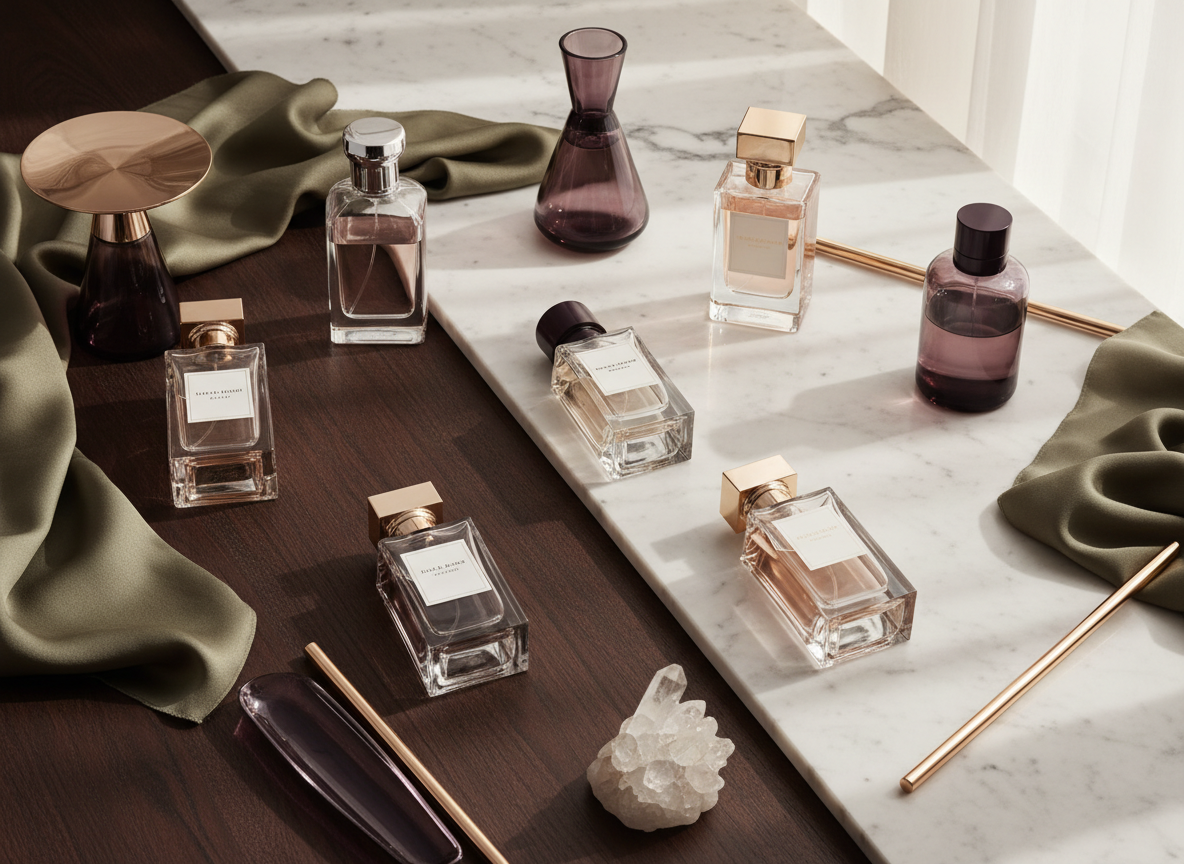
A fragrance wardrobe should create options, not inventory anxiety. If ten bottles all fill the same role, the collection is not more versatile than three bottles; it is simply larger. The goal is to own distinct scents you actually reach for.

Trend context: Pinterest Predicts 2026 reported growth in searches for niche perfume collections (+500%), perfume layering combinations (+125%), perfume notes (+80%), scent layering (+75%) and signature scent (+45%). The figures reflect Pinterest’s reported global English-language search data.
Start with scent roles, not a wish list
Instead of collecting by brand or hype, assign each fragrance a job. Your wardrobe may need only four or five roles.
| Role | What it might smell like | When you use it |
|---|---|---|
| Everyday | Clean musk, light woods, soft floral | Work, errands, casual days |
| Warm/cozy | Vanilla, amber, spice, creamy woods | Cool weather, evenings |
| Fresh | Citrus, green, tea, aromatic | Warm weather, daytime |
| Statement | Dense floral, leather, resin, bold gourmand | Events or nights out |
| Personal favorite | Anything that feels uniquely you | Whenever you want |
You do not need one fragrance in every category. The purpose is to expose duplication before you buy.
Audit what you already own
Line up your bottles and samples by role. If four fragrances are sweet vanilla ambers and none are fresh, you have identified both an overlap and a gap.
A gap does not automatically require a purchase. It simply tells you what to sample next if you want more range.
A Peart note: A collection gets more useful when the next bottle adds a new function, not just a slightly different version of your favorite DNA.
Use samples as a waiting room
Keep a sample tray for fragrances you are considering. A scent should survive several wears before it becomes a bottle. This separates true preference from the excitement of discovery.
Discovery sets are ideal for this. Read Niche Perfume Discovery Sets: How to Sample Before You Buy for a testing process.
Track overlap by what you smell, not by note lists
Two perfumes can have different note pyramids and still fill the same role on your skin. If both read as sweet, warm vanilla fragrances to you, they may compete for the same wearing occasions.
Ask: when would I choose the new one instead of what I already own? If the answer is unclear, wait.
Buy the size that matches the role
- Daily signature: a larger bottle can make sense if you finish fragrance consistently.
- Seasonal scent: a medium or travel size may be enough.
- Occasion fragrance: consider a travel spray before a full bottle.
- Experimental scent: keep sampling until repeat use is obvious.
Create a one-in, one-out rule only if it helps
Strict one-in, one-out systems work for some people and feel artificial to others. A softer rule is to pause buying when a category becomes crowded. Finish, sell, gift or simply use what you have before adding another near-duplicate.
Rotate instead of buying for novelty
Put part of the collection away for a season, then rotate it back in. Familiar fragrances can feel new again after a few months out of sight, which reduces the urge to buy solely for novelty.
Use layering to expand a small wardrobe
Layering can make a compact collection more flexible. One clean musk can soften several florals; one vanilla can warm several woods. You get more combinations without buying a separate bottle for every mood.
Use our Perfume Layering Guide and Perfume Oil vs. Eau de Parfum for Layering.
A simple six-item ceiling
If you want a concrete starting limit, try building no more than six active full-size fragrances: one everyday, one fresh, one warm, one statement, one seasonal favorite and one wildcard. Samples and travel sizes can handle experimentation without turning every curiosity into permanent inventory.
Bottom line
A good fragrance wardrobe is defined by range and repeat wear, not bottle count. Sample first, identify roles, notice duplication and buy the size that matches how often the scent will actually leave the shelf.