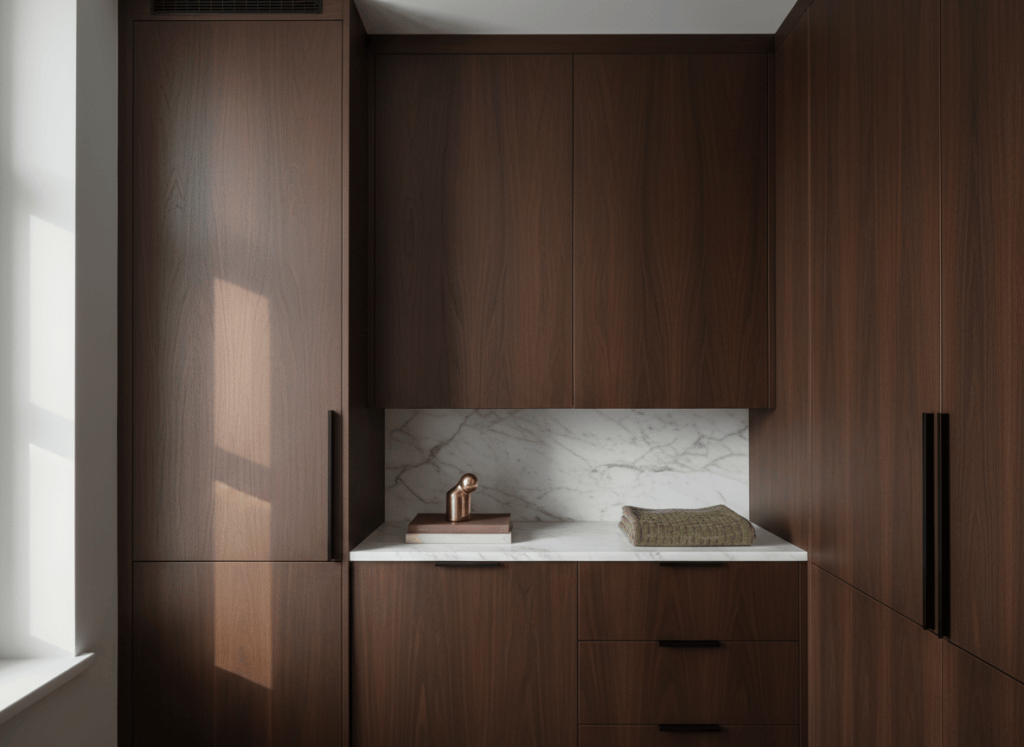
Small apartments do not always need more storage products. They usually need clearer zones, better use of vertical space, and fewer items competing for the same accessible storage.
Start by assigning every storage area a job
Instead of asking where an object fits, decide what each cabinet, drawer, shelf, and closet is for. One shelf might be daily cleaning supplies. One drawer might be charging and tech. One closet section might be seasonal clothing. Storage becomes easier to maintain when each area has a defined purpose.
Use the easiest-to-reach space for the most-used items
Prime storage should go to items used daily or weekly. Holiday decor, backup linens, sentimental items, and rarely used appliances can move higher, lower, or deeper. This prevents frequently used things from living on counters simply because the cabinets are full of low-priority items.
A Peart note
In a small apartment, storage works best when it follows daily behavior instead of fighting it.
Go vertical before going wider
- Add shelf risers inside cabinets.
- Use tall bookcases instead of multiple low storage pieces.
- Store infrequently used items above eye level.
- Use hooks, rails, or over-door organizers where appropriate.
- Choose narrow vertical storage for tight wall sections.
Use hidden storage where furniture already occupies floor space
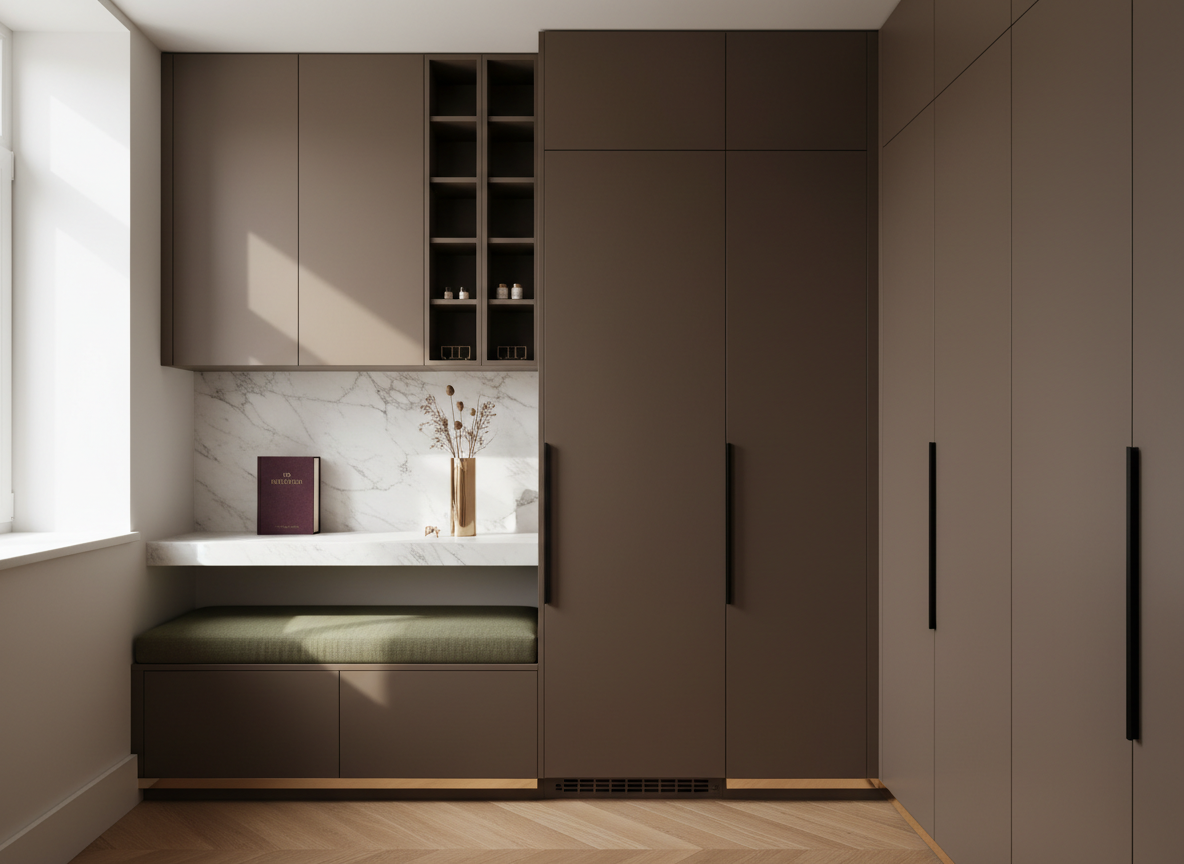
Bed frames with drawers, storage benches, ottomans, lift-top furniture, and closed media units can add capacity without creating another visual object in the room. In a small apartment, closed storage is especially useful for reducing visual noise.
Create drop zones near the point of use
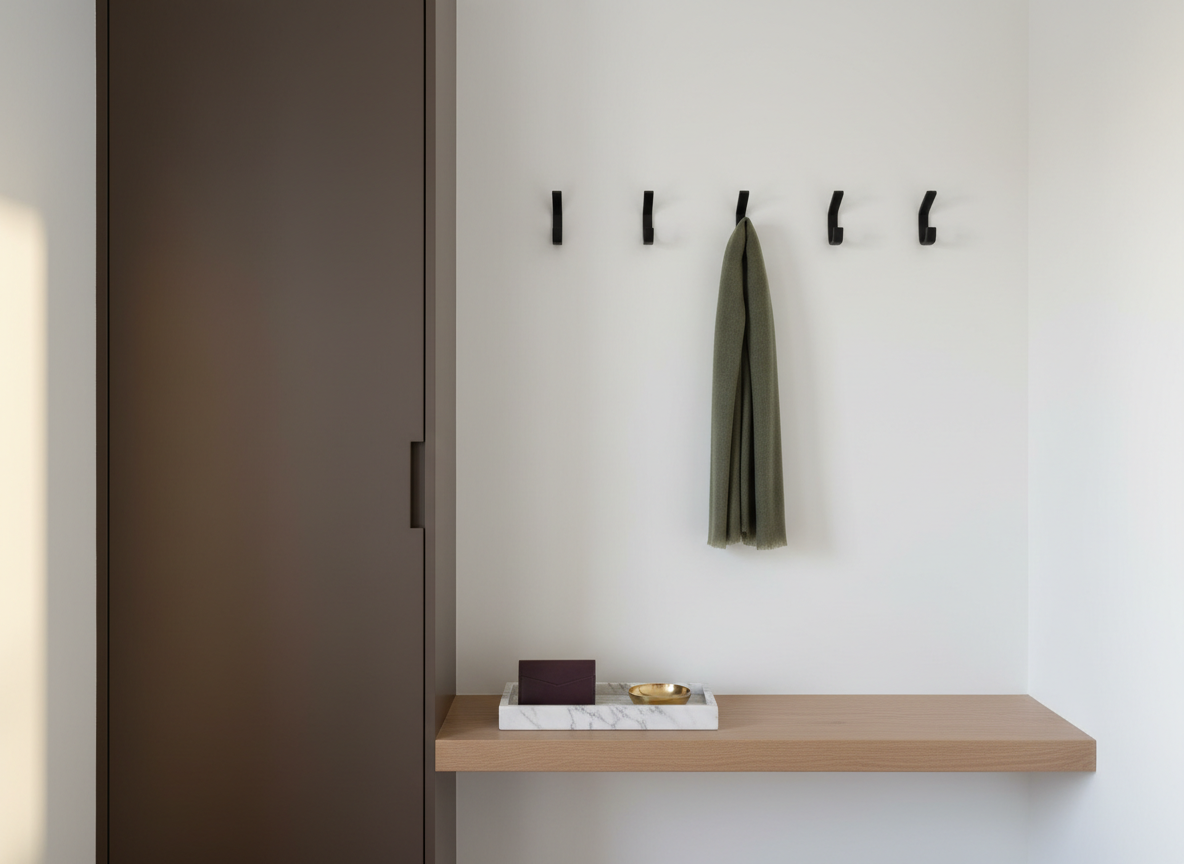
Keys, bags, mail, shoes, pet supplies, and chargers become clutter when their storage is too far from where the items naturally land. A small entry cabinet, wall hook, tray, or drawer placed at the point of use can eliminate an entire recurring mess.
Measure before buying organizers
Measure the inside width, depth, and height of cabinets and drawers, including hinges and obstructions. Then choose organizers based on the actual usable dimensions. Buying bins first often creates wasted gaps or containers that do not fit the items they were supposed to organize.
Use open storage selectively
Open shelves can work well for attractive items that are used often, but they require more visual maintenance. If a category contains mismatched packaging, cables, papers, or many small pieces, a drawer, cabinet, or opaque container usually creates a calmer result.
Reduce duplicate categories before adding storage
Extra storage cannot solve unlimited inventory. Before buying another cabinet, check for duplicates, expired products, clothing that no longer fits the wardrobe, and supplies kept “just in case” but never used.
Plan the room as a system
The strongest small-space layouts connect furniture placement, storage, movement paths, and daily routines. For more room-planning, renter-friendly, and organization resources, browse Home & Interiors.
 A Peart Company