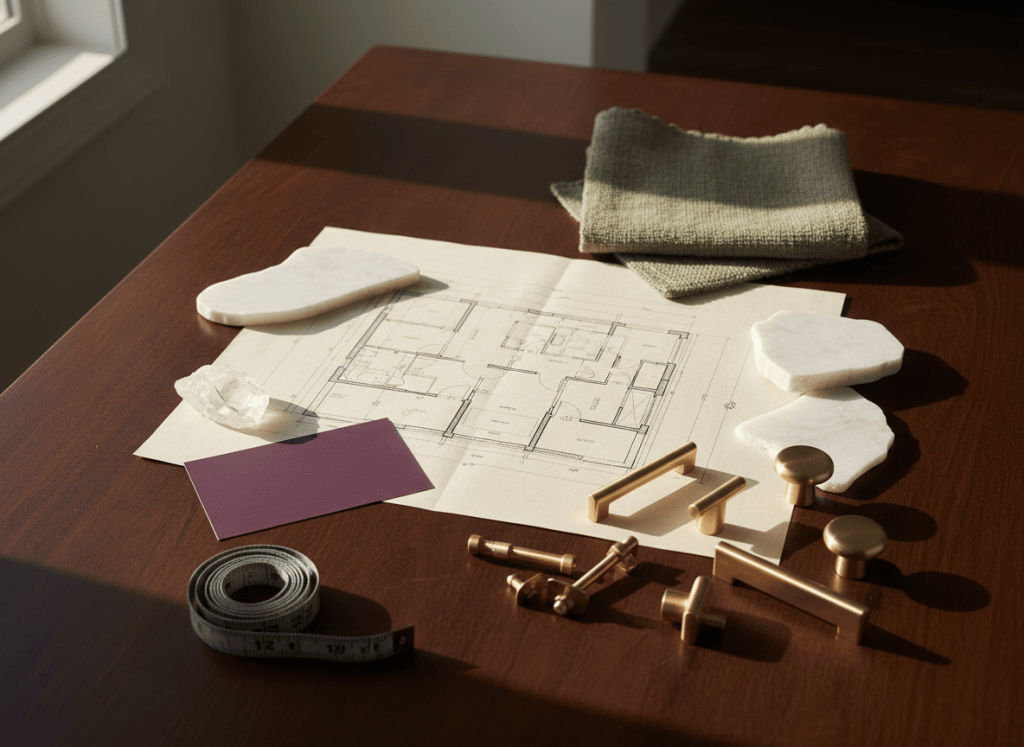
A renovation gets expensive and chaotic when decisions happen out of order. A good plan turns one large project into a sequence of smaller, trackable decisions.
This checklist is designed for a meaningful remodel, refresh or multi-room project. Use it before demolition starts, then keep it active throughout the project.

A Peart note
The sequence of decisions matters as much as the decisions themselves. Lock construction-dependent choices before decorative ones.
1. Define the project before pricing it
- Write the problem each room needs to solve.
- Separate must-haves from nice-to-haves.
- List what stays, moves, gets repaired and gets replaced.
- Measure the room and record doors, windows, plumbing, outlets, vents and structural conditions.
- Decide whether the work is cosmetic, functional, structural or mixed.
2. Build the budget in categories
Track labor, materials, fixtures, furniture, permits, delivery, disposal, temporary living costs and contingency separately. This makes overruns easier to diagnose than one giant project total.
See How to Build a Renovation Budget That Tracks the Whole Project →
3. Compare contractor quotes on the same scope
- Give each contractor the same written scope.
- Ask what is included and excluded.
- Record labor, materials, allowances, payment schedule, estimated duration and warranty terms.
- Confirm responsibility for permits, debris removal, surface protection and final cleanup.
4. Lock decisions that affect construction early
Finalize layout, plumbing locations, appliance sizes, lighting locations, cabinetry, major tile selections and built-ins before decorative details. Those decisions affect dimensions, rough-ins and lead times.

5. Create a purchase schedule
- Track item, supplier, model, finish, quantity, price, expected delivery and return deadline.
- Flag long-lead products before work starts.
- Inspect deliveries before installation day.
- Keep receipts, warranties and specification sheets together.
6. Build the timeline around dependencies
Demolition, framing, rough electrical and plumbing, inspections, drywall, flooring, cabinetry, counters, finish electrical, plumbing fixtures, paint and final installation depend on earlier work being complete.
7. Track every change order and design decision
Record the date, decision, cost impact, schedule impact and approval. A decision log is easier to audit than scattered texts and screenshots.
8. Keep a running punch list
- Add incomplete or defective work as you notice it.
- Photograph issues when useful.
- Assign responsibility and a target date.
- Recheck corrections before final payment.
Keep the project in one workbook
The Home Renovation Command Center combines a renovation budget, room planner, contractor quote comparison, purchase tracker, timeline, punch list and design-decision log in one Excel workbook.
For more planning, apartment and interior resources, browse Home & Interiors.
Some future product recommendations on this page may use affiliate links. When they do, they will be disclosed and may earn A Peart Company a commission at no additional cost to you.
 A Peart Company